Once Again Ill Go and Get the Fish Monger to Prepare the Fish
Selecting and Serving Fresh and Frozen Seafood Safely
Impress & Share (PDF: 3.07MB)
WATCH a VIDEO on Seafood Safety
en Español
Fish and shellfish contain high quality protein and other essential nutrients and are an important office of a healthful nutrition. In fact, a well-balanced diet that includes a variety of fish and shellfish can contribute to heart health and aid in children'south proper growth and development.
Every bit with any type of food it is important to handle seafood safely to reduce the risk of foodborne disease, often called "food poisoning." Follow these condom handling tips for buying, preparing, and storing fish and shellfish – and y'all and your family unit can safely enjoy the fine taste and proficient nutrition of seafood.

Purchase Right
Fresh Fish and Shrimp
Only buy fish that is refrigerated or displayed on a thick bed of fresh ice (preferably in a case or nether some type of cover). Considering the color of a fish can be afflicted by several factors including diet, environment, treatment with a color fixative such every bit carbon monoxide or other packaging processes, colour lone is not an indicator of freshness. The post-obit tips tin help you when making purchasing decisions:
- Fish should smell fresh and mild, not fishy, sour, or ammonia-similar.
- A fish's eyes should be clear and shiny.
- Whole fish should accept firm flesh and ruddy gills with no odor. Fresh fillets should take firm flesh and red blood lines, or scarlet flesh if fresh tuna. The mankind should jump dorsum when pressed.
- Fish fillets should brandish no discoloration, darkening, or drying around the edges.
- Shrimp, scallop, and lobster flesh should be articulate with a pearl-like color and piffling or no odor.
- Some refrigerated seafood may take time/temperature indicators on their packaging, which show if the product has been stored at the proper temperature. Always check the indicators when they are present and simply purchase the seafood if the indicator shows that the product is safe to eat.
- Fresh fish and fish fillets sold as "Previously Frozen" may not have all the characteristics of fresh fish (e.grand., brilliant optics, firm flesh, red gills, flesh, or bloodlines), nonetheless, they should still scent fresh and mild, not fishy, sour, or rancid.
Selecting Shellfish
Follow these general guidelines for safely selecting shellfish:
- Look for the label: Look for tags on sacks or containers of live shellfish (in the crush) and labels on containers or packages of shucked shellfish. These tags and labels contain specific information about the product, including the processor'south certification number. This ways that the shellfish were harvested and processed in accordance with national shellfish rubber controls.
- Discard Croaky/Broken Ones: Throw away clams, oysters, and mussels if their shells are croaky or broken.
- Do a "Tap Test": Alive clams, oysters, and mussels will close when the beat is tapped. If they don't close when tapped, practise not select them.
- Check for Leg Move: Live crabs and lobsters should evidence some leg movement. They spoil rapidly afterwards death, and so only alive crabs and lobsters should be selected and prepared.

Frozen Seafood
Frozen seafood can spoil if the fish thaws during transport and is left at warm temperatures for also long before cooking.
- Don't buy frozen seafood if its package is open, torn, or crushed on the edges.
- Avoid packages with signs of frost or ice crystals, which may mean the fish has been stored a long time or thawed and refrozen.
- Avert packages where the "frozen" fish flesh is not hard. The fish should not be bendable.
Shop Properly
Put seafood on water ice or in the refrigerator or freezer soon after ownership it. If seafood volition be used within two days later purchase, store it in a clean refrigerator at a temperature of 40°F or beneath. Apply a refrigerator thermometer to cheque! Otherwise, wrap it tightly in plastic, foil, or wet-proof paper and store it in the freezer.
Separate for Safety
When preparing fresh or thawed seafood, it'southward of import to prevent bacteria from raw seafood from spreading to ready-to-eat foods. Accept these steps to avoid cross-contamination:
- When buying unpackaged cooked seafood, make sure information technology is physically separated from raw seafood. It should exist in its own display instance or separated from raw product by dividers.
- Wash your hands for at least 20 seconds with lather and warm water later treatment whatsoever raw food.
- Wash cutting boards, dishes, utensils, and counter tops with soap and hot water between the preparation of raw foods, such every bit seafood, and the preparation of cooked or prepare-to-eat foods.
- For added protection, kitchen sanitizers can be used on cutting boards and counter tops after use. Or use a solution of one tablespoon of unscented, liquid chlorine bleach per gallon of water.
- If you use plastic or other non-porous cut boards, run them, along with plastic, metal, or ceramic utensils through the dishwasher after use.
Picnic Tips
A Clean Libation Is Disquisitional. Be sure to make clean coolers with hot soapy water before packing cooked seafood. Cleaning is especially important if the libation was previously used to transport raw seafood. If the cooler has been used to transport raw seafood, it is also a good idea to sanitize the interior later on cleaning using a kitchen sanitizer. A make clean libation prevents harmful bacteria from the raw fish from contaminating cooked seafood or other foods.
Keep Chilled Until Serving. Carry picnic seafood in a cooler with cold packs or water ice. When possible, put the cooler in the shade and keep the chapeau airtight as much of the time every bit you can.
Ready Safely
Thawing
Thaw frozen seafood gradually by placing it in the fridge overnight. If you have to thaw seafood quickly, either seal information technology in a plastic handbag and immerse it in cold water, or — if the food volition be cooked immediately thereafter — microwave it on the "defrost" setting and end the defrost cycle while the fish is notwithstanding icy but pliable.
Cooking
About seafood should be cooked to an internal temperature of 145°F. If you lot don't accept a nutrient thermometer, there are other ways to determine whether seafood is done.
- Fish: The mankind is clear and separates easily with a fork
- Shrimp, Scallops, Crab, and Lobster: The flesh becomes firm and articulate
- Clams, Mussels, and Oysters: The shells open during cooking — throw out ones that don't open up
Uncooked spoiled seafood can have sour, rancid, fishy, or ammonia odors. These odors get stronger after cooking. If you smell sour, rancid, or fishy odors in raw or cooked seafood, do not consume it. If you odor either a fleeting or persistent ammonia odour in cooked seafood, practise not swallow it.
Serving
Follow these serving guidelines in one case your seafood is cooked and ready to be enjoyed.
Follow these serving guidelines one time your seafood is cooked and ready to exist enjoyed.
- Never get out seafood or other perishable food out of the refrigerator for more than than two hours or for more than 1 hour when temperatures are to a higher place 90°F. Leaner that tin cause illness grow quickly at warm temperatures (betwixt twoscore°F and 140°F).
- For party planning, proceed hot seafood hot and cold seafood common cold:
- Keep common cold chilled seafood refrigerated until fourth dimension to serve.
- Serve cold seafood on ice if it is going to stay out longer than 2 hours.
- Keep hot seafood heated until time to serve or divide the seafood into smaller containers and keep them in a refrigerator until time to reheat and serve.
- Serve hot seafood under a heat source (e.g., hot lamp, crock pot, hot plate, etc.) if information technology is going to stay out longer than 2 hours or discard the seafood later 2 hours.
- Keep common cold chilled seafood refrigerated until fourth dimension to serve.
Eating Raw Seafood - What You Need To Know
Information technology's always all-time to cook seafood thoroughly to minimize the risk of foodborne affliction. Withal, if you choose to consume raw fish anyway, one rule of pollex is to eat fish that has been previously frozen.
- Some species of fish can contain parasites, and freezing will kill any parasites that may be present.
- However, exist aware that freezing doesn't kill all harmful germs. That's why the safest route is to cook your seafood.
Special Health Notes
At-Risk Groups
Some people are at greater risk for foodborne disease, and are likewise more than probable to take a lengthier disease, undergo hospitalization, or even die. These groups include:
- Pregnant women
- Children
- Older adults
- Persons with weakened allowed systems (such as transplant patients and individuals with HIV/AIDS, cancer, and diabetes)
These susceptible groups should avoid the following foods:
- Raw or undercooked fish or shellfish, or food containing raw or undercooked seafood (for instance, sashimi) found in some sushi or ceviche.
- Raw oysters, even if they are treated after they take been harvested. Postal service-harvest treatment eliminates some naturally occurring pathogens, merely does not remove all pathogens that can cause illness
- Refrigerated types of smoked seafood except in a cooked recipe, such as a casserole. Refrigerated smoked seafood (such as salmon, trout, whitefish, cod, tuna, or mackerel) is commonly labeled as "nova-style," "lox," "kippered," "smoked," or "hasty." Canned or shelf-stable smoked seafood is adequate.
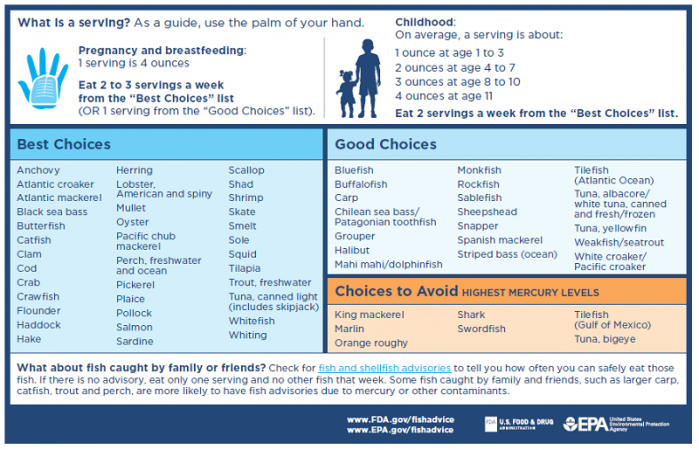
Important Advice for those who might become or are pregnant or breastfeeding and children ages i - xi years
FDA and EPA accept issuedadvice about eating fish. This communication tin help those who might become or are pregnant or breastfeeding as well every bit parents and caregivers who are feeding children make informed choices when it comes to the types of fish that are nutritious and safe to eat. This advice supports the recommendations of theDietary Guidelines for Americans.
For more than information, see https://www.fda.gov/fishadvice.
Enlarge in PDF
About Foodborne Illness
Know the Symptoms
Consuming dangerous foodborne bacteria will usually cause affliction within 1 to 3 days of eating the contaminated food. All the same, sickness tin can also occur inside xx minutes or up to vi weeks later. Although nearly people will recover from a foodborne disease within a short time, some can develop chronic, severe, or even life-threatening health problems. Foodborne illness can sometimes exist confused with other illnesses that have similar symptoms. The symptoms of foodborne illness tin can include:
- Vomiting, diarrhea, and abdominal pain
- Flu-like symptoms, such as fever, headache, and body ache
Take Activeness
If yous think that you lot or a family member has a foodborne disease, contact your healthcare provider immediately. Likewise, report the suspected foodborne illness to FDA in either of these means:
- Contact the Consumer Complaint Coordinator in your area. Locate a coordinator.
- Contact MedWatch, FDA's Prophylactic Data and Adverse Event Reporting Program:
- By Phone: 1-800-FDA-1088
- Online: File a voluntary report at http://www.fda.gov/medwatch
Watch a Video on Selecting and Serving Fresh and Frozen Seafood Safely
Source: https://www.fda.gov/food/buy-store-serve-safe-food/selecting-and-serving-fresh-and-frozen-seafood-safely
0 Response to "Once Again Ill Go and Get the Fish Monger to Prepare the Fish"
Post a Comment